
The Most Important Call a Facilities Leader Can Make
Operational AI, IT/OT convergence, and why your next strategic conversation is with the CIO.
By Steven Burrell
For most of the profession's history, facilities leadership was judged by silence. Lecture halls warm in January and cool in August. Lights on. Roofs dry. No one calling. Success was the absence of noise, and the department's role was essentially custodial: managing, as gracefully as possible, the slow decline of a very expensive pile of brick, concrete, glass, and steel.
That era has ended, and not gently.
Deferred maintenance backlogs that outstrip any plausible capital plan. Binding net-zero commitments that LED retrofits cannot reach. A retiring workforce carrying decades of undocumented knowledge out the door. Hybrid schedules leaving conditioned buildings half-empty. And building systems quietly joining the network whether or not anyone planned for it. Under those pressures, the old operating model doesn't fail loudly. It fails expensively, and mostly out of sight.
Under those pressures, the old operating model doesn’t fail loudly. It fails expensively, and mostly out of sight.
Operational Technology Has Been Promoted
The central reframing is that operational technology is no longer infrastructure to be maintained. It is a strategic asset that determines the institution's financial resilience, carbon performance, risk posture, and the daily lived experience of everyone on campus.
If the technology leader owns the institution's digital nervous system, the facilities leader owns its skeletal, muscular, and circulatory systems. Air handlers, smart locks, occupancy sensors, solar inverters: each becomes a node in a cyber-physical network rather than an isolated piece of equipment. The chief facilities officer stops being a steward of decline and becomes what I refer to in The Smart Campus Manifesto as the Architect of the Built Environment, orchestrating a cognitive organism rather than maintaining a static shell.
That vision rests on three pillars: predictive resilience, driven by IoT telemetry and AI fault detection that surfaces failures before they happen; radical sustainability, moving past passive efficiency measures toward a grid-interactive campus that optimizes against real-time carbon intensity and pricing; and a frictionless occupant experience, where lighting tracks circadian rhythms, and ventilation responds minute by minute to actual air quality.

On a smart campus, air handlers, smart locks, occupancy sensors, and solar inverters each become a node in a cyber-physical network rather than an isolated piece of equipment.
Operational AI Is Not the AI Everyone Is Talking About
This distinction is worth pausing on, because it's where a lot of campus conversations go sideways. Generative AI makes knowledge workers faster. It drafts, summarizes, and answers. Operational AI does something categorically different: it manages physical assets in real time. It talks to chillers. It forecasts equipment failure. It adjusts HVAC autonomously against occupancy and weather. The destination is not a better dashboard that measures conditions after the fact. It is a trusted, partly autonomous partner in running the building.
Campuses are unusually well suited to this shift. Nearly every other function in the institution has already been transformed by a wave of technology: spreadsheets displaced ledgers, email displaced the secretarial pool, CAD displaced drafting tables, cloud displaced the data center. Facilities largely went from paper CMMS to digital CMMS without fundamentally changing the process underneath. The work stayed the same; the forms got a screen.
Higher education also combines exactly the conditions where operational AI pays off fastest: significant scale, genuine mechanical complexity, centralized facilities management, aging infrastructure, ambitious decarbonization commitments, and hard budget constraints.
Where the Value Actually Shows Up
The case for operational AI collapses if it can only be argued in the abstract. It is more useful to be specific about where money and risk actually move. Among modern operational AI solutions, there are three clear value streams: direct savings that land on the operating budget immediately, cost avoidance that prevents small faults from cascading into expensive remediation, and risk prevention that protects occupants, research, and continuity. The framing is worth borrowing regardless of platform because those three streams hit three different lines of the budget and answer to three different people at the cabinet table.
Direct savings: the meter moves this month
Heating, cooling, and ventilation account for a large share of what a campus spends to operate, and that is where the fastest returns sit. Operational AI attacks it from two directions. It finds the specific, unglamorous corrections conventional oversight misses (a damper position that needs adjusting, a setpoint schedule still running a building as though it were 2019, simultaneous heating and cooling in the same zone) and turns them into dispatched work rather than a line on a monthly report nobody reads.
It also makes consumption responsive. Setpoints scale back against actual room occupancy rather than a schedule someone typed in during a previous administration. Loads shift based on grid conditions. Demand is watched against the prior month's peak, so an expensive new demand charge is flagged as it is forming rather than discovered on the bill four weeks later. On a campus with a serious utility budget, avoiding a single ratchet event can fund a year of the platform.
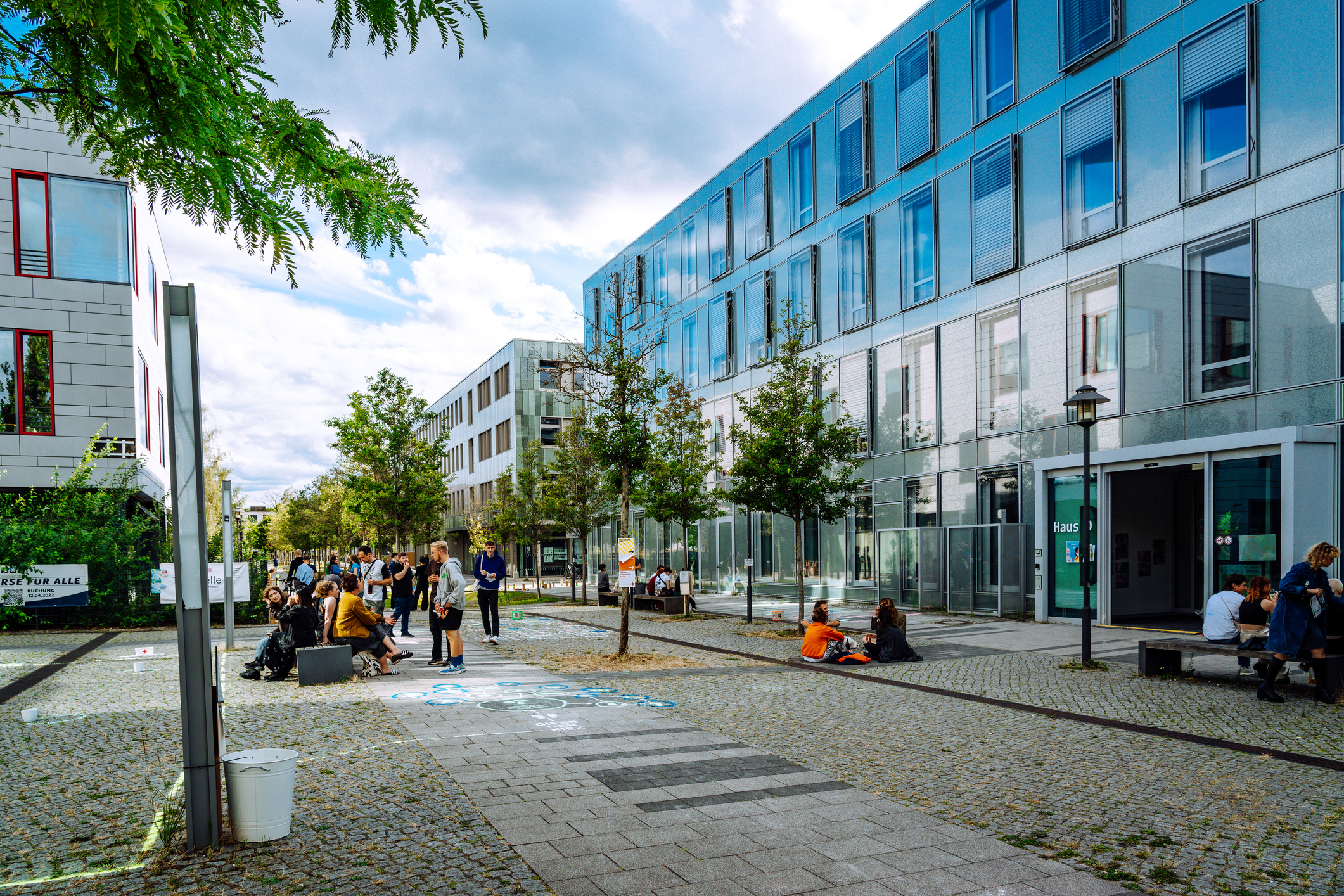
Hybrid schedules leave conditioned buildings half-empty. Operational AI scales setpoints back against actual room occupancy rather than a schedule typed in years ago.
A second, quieter source of direct savings is technician time. Field staff lose a substantial share of the day searching for information: locating the asset, finding the O&M manual, retracing steps a colleague already took last week. When operational AI puts that context in front of them conversationally, drawing on maintenance history, equipment documentation, and troubleshooting guides, the same headcount closes more work. For an institution that cannot hire its way out of a vacancy problem, that is a real capacity gain, and it shows up in the labor line.
Cost avoidance: the failure that never happens
This is where the arithmetic gets dramatic, and it is better shown than argued.
An outside-air damper gives occasional trouble closing all summer. Unremarkable, never quite worth a ticket. Then it sticks open on the coldest morning of the year. Sub-freezing air floods the mixing box, the heating coil freezes, a tube splits, and the first anyone hears of it is water coming through a residence-hall ceiling. Every clue was already in the data: the damper commanded closed, position feedback disagreeing, mixed-air temperature diverging from setpoint, the low-limit inching toward trip. But no one was watching that one point among the tens of thousands a campus generates every minute.
Operational AI watches all of them, continuously. The lead time is the difference between a work order to reseat an actuator and a burst-pipe remediation that displaces students, soaks the floors below, and lands on next year's capital plan. This is antifragility realized: the system gets stronger from the stress it detects rather than weaker from the stress it absorbs.
Or consider an institution that kept seeing unusually high water consumption in a vacant residence hall over the summer. Plumbers assumed faulty meters, or a bathtub left running. Initial checks found nothing, yet the meters, recently tied into a digital twin, still reported the same anomaly. The leak, when finally traced, was water leaching through volcanic soils, draining into an abandoned steam tunnel, and surfacing in a nearby culvert and creek. It had almost certainly been running for years.
Detecting an anomaly in a consumption pattern is no longer a research project. It is a standing behavior of a competent operational AI platform, and early detection is precisely what keeps a slow, invisible loss from becoming a remediation project with a long tail of downstream costs.
Risk prevention: the obligations that are not negotiable
The third stream rarely appears cleanly in an ROI model, and it often drives the first two to get funded.
Indoor air quality is the clearest example. Tied to particulate, CO2, and related sensors, operational AI can evaluate conditions in a space against recognized standards (ASHRAE thresholds, for instance) and raise a specific, located alert when they drift, pointing at the likely cause: ventilation, filtration, or simply more people in the room than the system was told to expect. On a campus, that means continuously monitoring classrooms, labs, and residence halls rather than sampling after somebody complains.
The same logic protects continuity. Negative-pressure labs, vivaria, data closets, and cold storage all fail expensively and quietly. Continuous monitoring shortens the window in which an abnormal condition goes unnoticed, and conversational triage during an event (what changed, what depends on this, what happens if we wait until Monday) removes the uncertainty that makes 3:00 a.m. decisions bad ones.
And the three compound
These streams aren't independent, which is what most business cases understate. Energy savings accrue month over month. Early fault detection prevents the cascade that would have consumed those savings in a single event. Continuous environmental monitoring protects the occupants and the assets that generate both. That interaction is why operational AI looks very different over a five-year view than in a pilot's first quarter, and why institutions routinely report double-digit reductions in energy, maintenance, and downtime costs, achieved not by cutting service levels, but by eliminating invisibility.
From Alarm to Decision
The obvious objection is that detection was never really the problem. Early smart building programs could identify faults perfectly well; what they produced was alert fatigue, because a human still had to interpret each signal, triage it against everything else, chase down context, and decide what to do, usually under time pressure.
The answer is the operational AI agent: not a chatbot, but a role-aware, policy-bound digital coworker scoped to a specific job and a specific person. Rather than raising one more alarm, it assembles a decision-ready package (probable root cause, confidence level, the window in which intervention makes sense, parts required, safety constraints, and the cost of deferring), then generates and routes the work order pre-populated with location data, lockout/tagout notes, and diagrams.
The technician remains the authority; the agent removes the friction. Critically, this is built human-in-the-loop by design: agents execute low-risk actions and escalate consequential ones, so autonomy expands only as fast as trust is earned. Over time, it converts tribal knowledge held by a retiring workforce into institutional operating memory.
It also changes what gets measured. A mature operational AI practice does not report faults found. It reports avoidable cost identified, then tracks what share of that was converted into realized savings once a technician was actually dispatched. That single distinction is the most honest ROI test available, and it disciplines the entire program. It also surfaces an uncomfortable but valuable fact: a closed work order is not the same as a resolved root cause. The faults that keep recurring after the ticket is closed are the ones that deserve a leader's attention.
A closed work order is not the same as a resolved root cause.
The energy side follows the same arc from watching to acting. Instead of a passive consumer, the campus becomes a dispatchable asset: battery storage flattening demand peaks, distributed generation aggregated into a virtual power plant, load shifted automatically toward hours when grid power is cleanest and cheapest.
The Honest Obstacles
Let's be unromantic and honest about why operational AI and OT capabilities stall.
Run-to-failure is culturally entrenched. Facilities teams get recognized for heroic saves at 2:00 a.m., not for the quiet prevention that means nobody's phone rang. Shifting to condition-based work means trusting data over instinct, which is a leadership problem before it is a technology one.
The economics are circular. Institutions consumed by emergency repairs lack the time and money to deploy the very capabilities that would end the emergencies. They are too busy bailing water to patch the hole in the boat.
Complexity can make things worse, not better. When every building is treated as a bespoke deployment, with inconsistent naming, idiosyncratic alarm logic, and undocumented integrations, you don't get a smart campus. You get a fragile one that only two people understand. You cannot automate what you cannot operate predictably. Alarm floods become noise. Confusing interfaces breed workarounds. Analytics nobody can act on become theater.
Deferred maintenance compounds beyond the balance sheet. Sensors bolted onto a degraded, drifting controls environment produce data you can't fully trust, scale, or secure. Deferred maintenance is not a facilities problem; it is a strategic risk multiplier.
And shadow OT is already here. Sensors and controllers reach the network without onboarding, ownership, lifecycle management, or segmentation. A compromised building automation system is not an IT inconvenience; it can freeze pipes, disrupt negative-pressure labs, or shut down a residence hall.
Why the Next Call Is to Your CIO
Every capability described above depends on something the facilities organization does not own outright: the network, the data estate, the security architecture, the AI platform. And the technology organization, however capable, cannot generate a single useful signal without a physical plant instrumented to produce it.
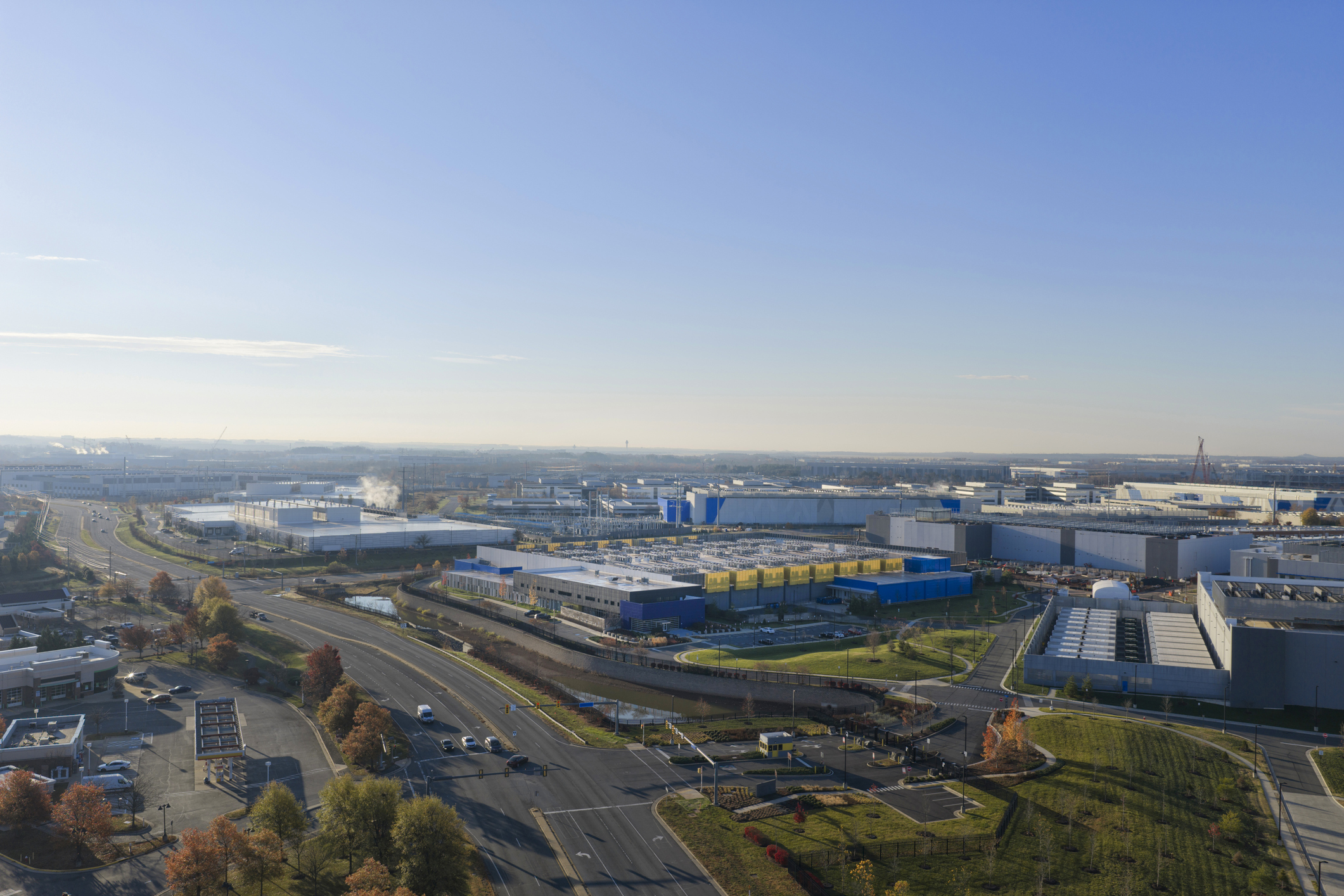
Every capability operational AI promises depends on infrastructure facilities doesn’t own outright: the network, the data estate, the security architecture, and the AI platform.
The gap between these two functions is fundamentally a language barrier, and both dialects are legitimate. IT lives in continuous integration and rapid obsolescence, where a server architecture is legacy in three to five years. Facilities pours concrete and installs steam loops meant to last thirty to fifty years. IT's instinct on a compromised system is to isolate and patch immediately; facilities operates under life-safety and research-continuity obligations that make downtime close to impossible.
Neither risk model is wrong. Left unmanaged, the mismatch produces fragility: pilot sprawl, vendors functioning as de facto architects, inconsistent security, and data that gets argued over instead of acted on.
The answer is a genuine executive alliance rather than a service relationship: a shared vision that functions as a Declaration of Interdependence, a governance structure with explicit decision rights, and a bilingual service catalog that expresses each campus service in both operational dialects at once: availability, integrity, and identity alongside uptime, comfort, safety, and compliance.
“You don’t need a finished strategy to make that call. You need a counterpart who wants the same outcome.”
Ask your CIO for an hour this quarter. Not to request a system. To open the conversation only the two of you can have. Worth putting on the table:
- Establishing operational truth. A current-state inventory and readiness assessment of OT assets, controllers, network segments, and vendor access. Modernization without it is guesswork.
- A common semantic layer. Agreeing that a given room is identified identically in the BMS, the space scheduling system, and the energy dashboard, via an ontology such as Brick Schema or Project Haystack, is the unglamorous prerequisite for any AI use case.
- API-first, digital-twin-ready procurement. Making digital handover a contractual term so that capital projects stop producing expensive buildings that can't talk.
- Joint ownership of the cyber-physical perimeter. Micro-segmentation, zones and conduits, and zero-trust access for third-party maintenance vendors.
- One high-value proof point. Central plant optimization and residence hall energy and air quality are among the most reusable starting patterns.
- A new scorecard. Mean time to predict rather than repair. Failures algorithmically avoided. Avoidable cost identified versus realized. Dispatch optimization. Demand-response yield. Capital debt avoided. These reframe the board conversation from the cost of keeping the lights on to defending the endowment and delivering the institution's climate commitments.
You don't need a finished strategy to make that call. You need a counterpart who wants the same outcome, and the willingness to go first.
About the Author
Dr. Steven Burrell brings more than forty years in higher education technology to the subject. He has served as vice president and chief information officer at five institutions, spanning doctoral research universities, private liberal arts institutions, and community colleges, most recently at Northern Arizona University. EdTech magazine named him one of the top 30 higher education IT influencers in 2020, and he has advised on statewide AI policy, tribal and rural broadband initiatives, and international CIO advisory boards. He is the author of The Smart Campus Manifesto: Transforming IT and OT for the AI-Enabled Sustainable Smart Campus. Connect with Steven on LinkedIn.
Read the Full Issue
This article first appeared in the Fall 2026 issue of Facilities Manager, the magazine of APPA. Read the full Fall 2026 issue for more stories from member campuses.

The Magazine of APPA
Facilities Manager, Fall 2026
APPAU St. Louis, Start With Better Data, AI-Ready Workforce, and The Most Important Call.
Have a project or lesson to share with your peers? Email publications@appa.org to submit to Facilities Manager.