
Smart Facilities, AI-Ready Workforce
Lessons from APPA's 2026 T3 AI Summit and the AI for Facilities: 101 workshop series.
By Sid Thatham and Pete Zuraw
Artificial intelligence (AI) has arrived in facilities management faster than most departments were ready for it. The question facing campus operations leaders is no longer whether these tools will matter, but how to build the judgment to use them well, and how to bring an entire workforce along. Every generation of workplace technology arrives with a promise and a scramble, but the rapid pace with which AI continues to evolve sets it apart. The tools change month to month, the capabilities expand, and the guardrails shift underneath them, fast enough that waiting for the dust to settle is itself a decision, and usually the wrong one. Organizations that are late in adapting to this changing landscape risk watching their peers pull ahead and watching their most capable people leave for institutions that let them work with modern tools.

In February 2026, APPA hosted Targeted Titles and Topics (T3), a two-day summit to take measure of AI in educational facilities. T3 is APPA's ongoing workshop program that convenes specialists for a deep-dive discussion on emerging topics shaping the profession, with topics rotating as the trends and needs of the field evolve. More than sixty participants of widely varying skills but uniformly strong interest contributed across two days of presentations and roundtable discussion. Hearing from professionals on campuses and in business-partner organizations, the conversation surfaced new insights, familiar concerns, and ultimately a shared conviction: more needs to be done, and more hands-on opportunities should be made available for people who want to develop their skills and advance their communities' use of these tools.
The summit was the second in an ongoing series of initiatives designed to encourage educational facilities leaders to look seriously at how AI can and will alter current practice. Given the extraordinary rate of adoption already underway, AI has the potential to disrupt daily life even more than the smartphone, a device that reshaped communication, socialization, personal productivity, access to information, and the movement of money. Smartphones also changed our society and our sense of self in ways we are only now understanding, nearly twenty years after the first iPhone. These conversations recognize that we have a chance to learn from that experience and more actively shape how AI contributes to society's improvement, while managing areas of concern.
One clear outcome of the summit was a call to action. The appetite for discussion was real, but participants wanted somewhere to practice. In response, AI for Facilities: 101, a hands-on workshop series built to turn that interest into working skill, was developed. Its first three cohorts ran in April, June, and August-September 2026, and the fourth will run in November.
Documenting the summit and the workshops in full could consume an entire issue of Facilities Manager. What follows instead distills the most important lessons, organized to guide the reader from one to the next. The sequence is deliberate but does not imply priority; every theme matters.
Begin Where You Are: Be Curious
AI is a fluid and dynamic idea right now. Whether you have been dabbling for years or wading in for the first time, the one thing you can be sure of is that the world of AI is dramatically different today than it was almost four years ago when ChatGPT was released, and in many respects different from what it was six months ago. The need to "learn at the speed of change" can be overwhelming and can create anxiety: Where do I start, and how do I even keep up?
While AI has evolved over the past few years, what has remained (relatively) stable is your data and the world around it. Your utility data, maintenance records, budget trends, and workforce information all provide opportunities to explore how to leverage AI. You already understand the context of that data. So, with curiosity and an open mind, start there. Doing so will help you discover relationships and opportunities you may not have had time to explore before, while giving you a safe place to play with and learn about AI.
The traditional approach of learning new software by studying an operations manual does not apply to AI tools. These tools, particularly those built for natural language such as everyday English, are meant to be conversational, at least to begin with.
What you do not need to get started
- An understanding of how AI works internally
- Time spent studying operations manuals
- Expertise as a "prompt engineer"
- Weeks of training before you see any value
What you do need
- Some public or non-confidential data
- An understanding of some basic boundaries about data
- A question you want to answer
- A willingness to explore
Data sensitivity: explore, but protect
While exploration is encouraged, even necessary, protecting confidential information still matters, maybe now more than ever. Use the guidelines below as a starting point to steer decisions about what to include in any AI use. Secure AI resources do exist, but start with the assumption that your work is not secure until you confirm otherwise.
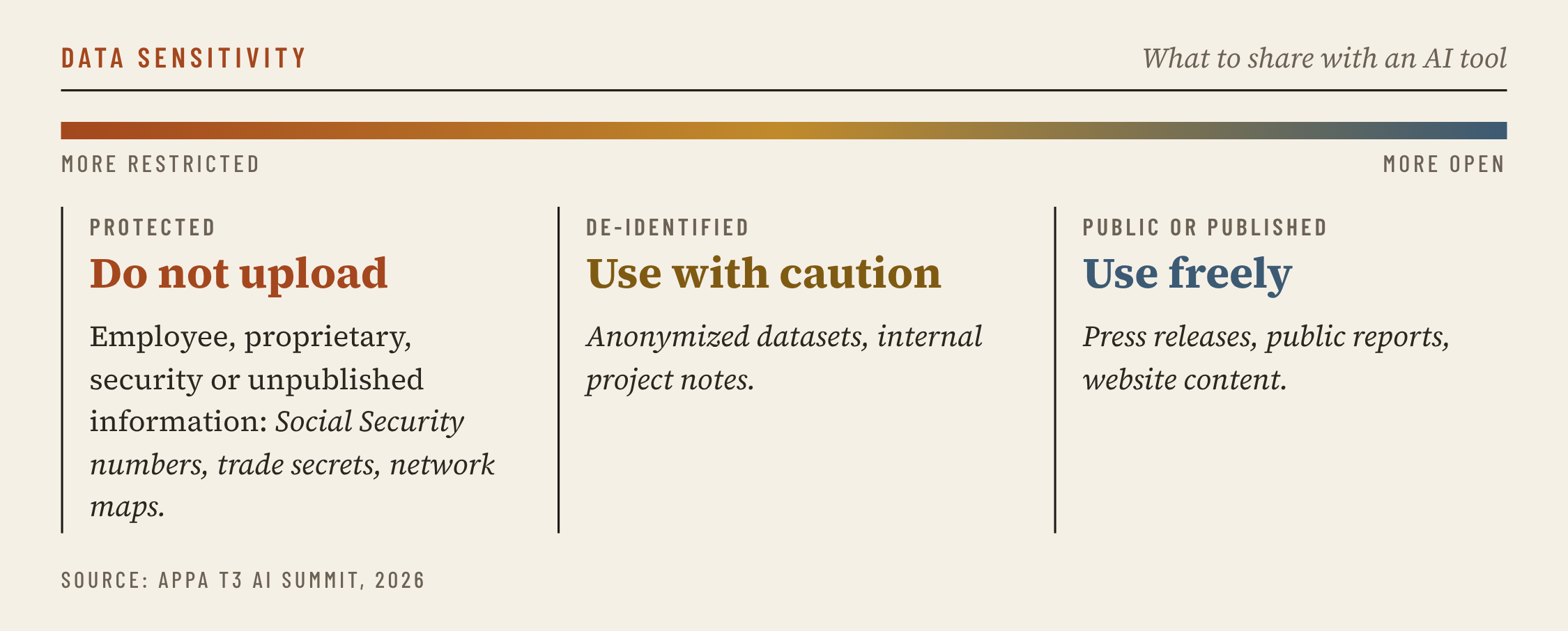
Figure 1. Guidelines for deciding what data to share with an AI tool.
The Real Bottleneck Is Data, Not AI Capability
There has never been any doubt that colleges and universities are vast, complicated communities. That complexity is multidimensional (sheer quantity, technical sophistication, variety of activity, and a multiplicity of human interests, needs, and desires) and it can overwhelm even the best intentions to manage or add value to any part of it.
AI has the potential to help us get our hands around at least some of that complexity, precisely because it excels at the tasks that scale poorly for humans: consolidating information, processing data, running basic analytics, and applying rule-based logic across enormous volumes. AI tools have been developed and trained using vast, widely available data that can seem boundless. The information it can tap into far outstrips the knowledge base of any single human being, which can make AI seem impossibly smart and capable of answering any question or solving any problem.
But the data needed to solve many of the most pressing facilities problems facing college and university leaders was never part of AI's development. That data is locked in management systems, in file cabinets, and in people's heads on those very campuses. Its quality (or at least its integrity) is often suspect, given how widely it is distributed and how frequently it lacks disciplined maintenance. The real constraint is not whether AI is capable, but whether your data is usable.
Your data may be:
- Scattered across multiple systems
- Inconsistent across various sources
- Noisy or incomplete
Before delving too deep with AI, address a few questions about data quality.
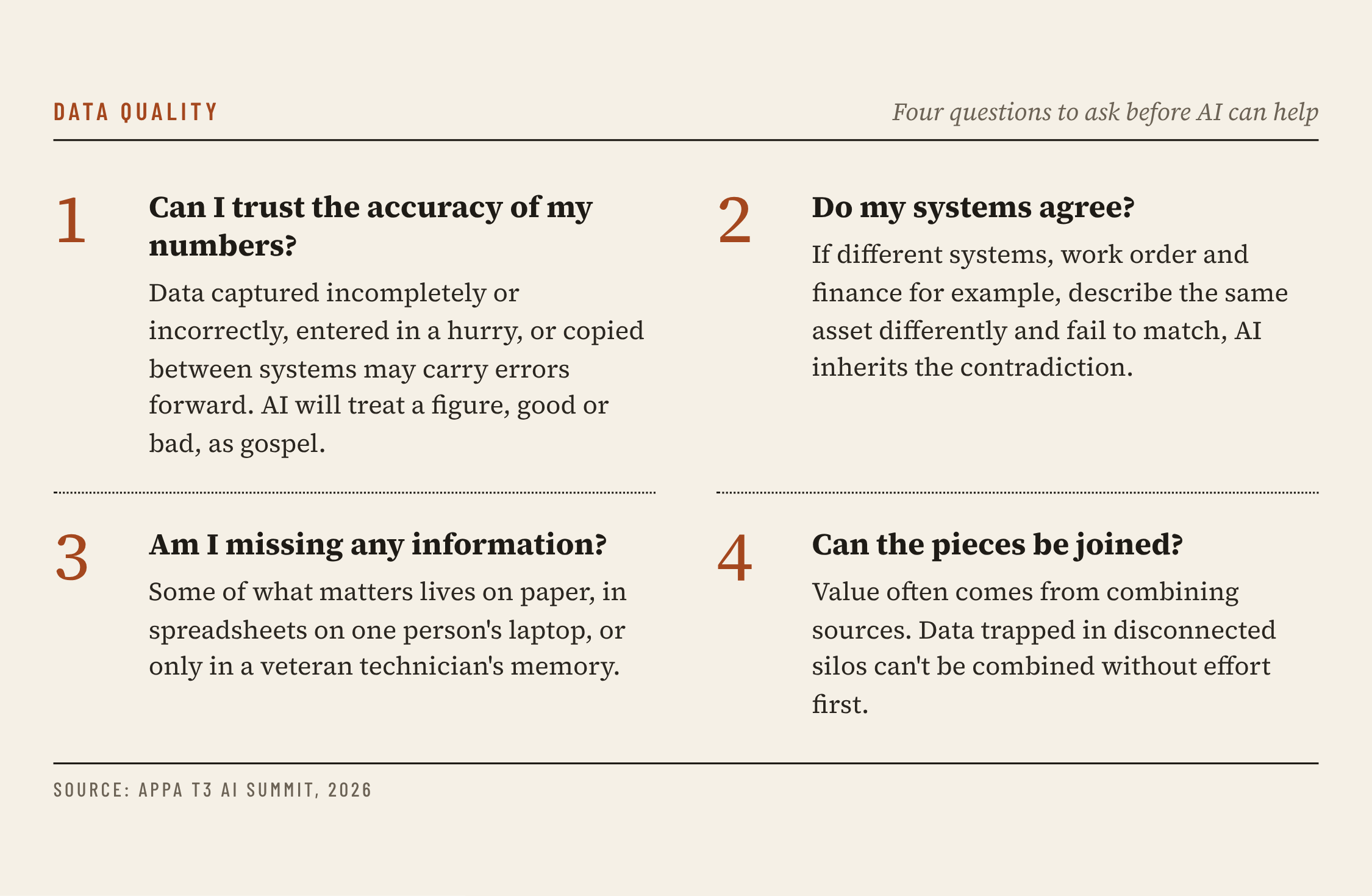
Figure 2. Four questions to ask about data quality before relying on AI.
For AI to be useful, you need data that is accurate and properly defined; the ability to combine data from various sources; context for what the data does and does not include; and continuous maintenance and improvement of data quality.
The summit made clear that the advent of AI accelerates the need for better data management, a discipline that may not have been a priority for years. AI has simply shone light on the cost of neglect much sooner. Facilities leaders should assess the current state of their data and prioritize high-impact datasets for readiness. Defining and enforcing data standards will be necessary, along with validation rules, spot checks, and perhaps some training on why these definitions and standards matter. Clear data ownership and accountability will improve quality.
Quick win: Assess, prioritize, and focus on one priority dataset to get immediate, actionable steps underway.
Long term: Address data governance, system integration, and the ongoing management of data quality, integrity, and security.
Not every best practice can be implemented immediately, but understanding the overall data-management landscape will support both AI adoption and better decision-making.
Start Small, Pilot, Prove Value
Learning something new can leave you overwhelmed by what you don't know and by what you imagine you could do if you could just master the tool. That feeling is common with AI, regardless of experience level. Curiosity can overwhelm the best of intentions; channeling it toward the specific questions you want to answer turns curiosity into intentional, structured exploration.
The instinct to use the most powerful new tool in your arsenal on your hardest problem is worth resisting. As the "human in the loop," the fastest way to build real judgment is to point AI at a task you already understand well enough to check its work: something you could do yourself, that the tool might simply do faster or present differently. When you already know roughly what a good answer looks like, you can evaluate the tool without also wrestling with an outcome you can't judge.
For beginners, it is essential to focus learning on a very specific set of objectives. Making a list you can narrow to a single pilot area keeps learning focused and moving quickly. The goal is not to understand AI, but to understand whether AI can answer questions you care about, how long that takes, and what you learn along the way.
Before starting, you will need to know:
- What the task is.
- What a good result would be.
- How you will know whether using AI was worth the effort.
Choose your pilot
The key to picking a successful pilot is starting with a task or challenge for which you already believe you understand the answer and the likely solution process. Create a pilot where AI does work you can already do, but perhaps faster, or with a different depiction of the result. Before you begin, the pilot should have a clearly defined task, an expected result, and measurable value for you or your organization. This lets you test the process of interacting with AI without also introducing variables you don't understand in the result.
Also define what success looks like before you start. Consider criteria such as accuracy of results, time saved, insights gained, and ease of use. Pick a metric or two (time saved, a sharper insight, an easier workflow) that matter most to you and measure it.
Once you feel comfortable, grow deliberately by changing one variable at a time.
- Same tool, new questions. For example, in one tool, use a set of energy data to build a table showing performance over time with observations on possible causes; then, with the same data, explore likely future performance and ways to improve it through changes in behavior, tools, or purchasing.
- Same questions, new tool. Having modeled the energy data in one tool, run the same future-performance exercise in a different one to compare.
Changing everything at once may not tell you anything about what worked or what did not work.
What emerged from the summit was a simple way to read the results of these first experiments. Two things are worth tracking together: how confident you feel steering the tool, and how much value the output actually delivered. A simple confidence-versus-value matrix helps you decide what to do next.
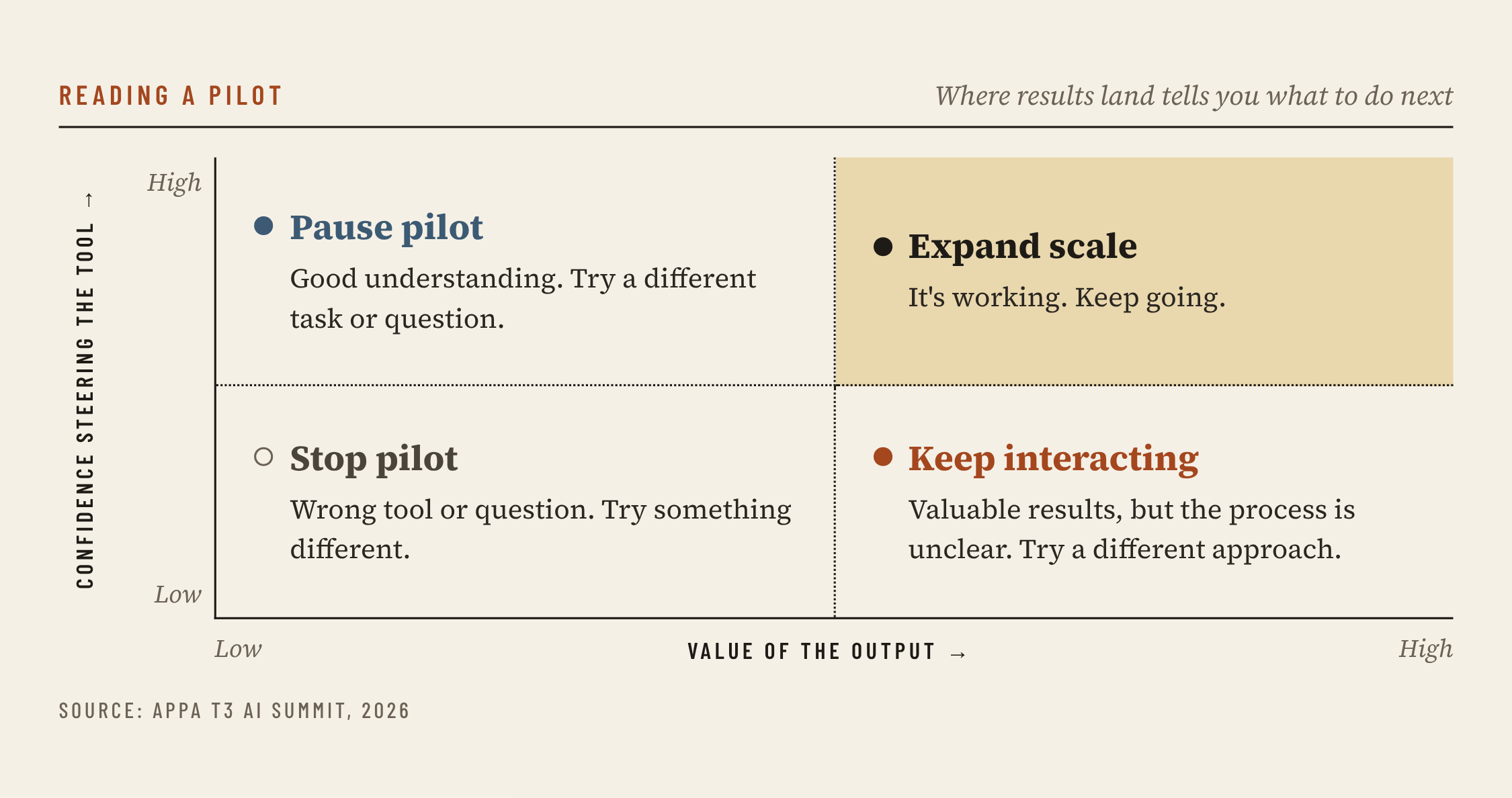
Figure 3. A confidence-versus-value matrix for reading the results of a first AI pilot.
As you identify where AI adds value, you can accelerate your use in those areas of greatest benefit while remaining intentional about your learning.
Keep the Human in Charge: Trust, but Verify
The preceding steps establish trustworthy processes, confidence in your understanding of the tool, and trust in its work. But trust in the tool and trust in a given result are not the same, and the two must be distinguished.
Since its explosion into public use, AI has been infamous for its ability to hallucinate answers that are simply not true. While that tendency is far less prominent today, it laid the groundwork for a principle that should govern work with any partner, artificial or otherwise: trust, but verify. As confidence grows in our relationships with other people, we rely on them more, yet healthy relationships are still marked by a willingness to validate work and to show the methods behind results. That transparency generates trust and gives us the chance to catch errors, whether in methodology or in fundamental assumptions.
The same holds for AI. As tools advance, they increasingly show their work and cite their sources. But that transparency does not relieve us of the need to test answers in multiple ways to be sure the output is the result we want. That is why the human role becomes more important, not less. AI's capabilities and limitations are not always clear to the general user, and that uncertainty is exactly why people remain essential when AI-generated information carries real consequences. The most valuable work, from judgment and strategy to interpretation and ethical, value-based decision-making, is the work humans do uniquely well. Used well, AI can increasingly handle much of what to do, freeing facilities professionals to focus on how and why.
AI remains a technology deployed by the humans controlling it. Its power to process information, synthesize data into new relationships, and crunch numbers at astonishing speed will shift the kind of work humans need to do, lifting us away from the mundane and toward transformative work. But if you are not accustomed to transformative work, positioning yourself to leverage AI takes deliberate effort. Realistically, that begins with understanding where AI can go wrong.
Types of errors to watch for
- Hallucinations. The model generates incorrect or nonsensical information, for instance stating that the Eiffel Tower is in Berlin. Verify by cross-referencing with reliable sources.
- Garbage in, garbage out. Poor input data yields poor results, like cooking with spoiled ingredients. Verify by cleaning and double-checking the data before use.
- Assumptions. AI fills gaps with guesses, assuming, say, that everyone has internet access. Verify by questioning assumptions and testing them against real-world scenarios.
- Context. Without background, AI can't tell a riverbank from a financial bank, or the fruit from the tech company. Verify by supplying the details and examples the model needs.
- Selection bias. Skewed or incomplete data distorts results; a model trained mostly on urban data may misunderstand rural life. Verify by comparing your data against the bigger picture.
How much verification is "enough verification"?
Because AI processes information so quickly, the time it saves in producing an answer usually leaves ample time to verify that answer, but how much verification is required depends on the stakes of being wrong.
When stakes are low (the output influences thinking but does not drive consequential decisions) little double-checking is needed, and correctness is often intuitively apparent. A recommended practice plan for a child's Little League team is a low-stakes example.
At the other end are critical stakes with financial, safety, or legal impact. Here, answers may be far from intuitive, may require expertise beyond the requester's, may demand significant analytical time, and may carry dire consequences if wrong. In such cases, the person guiding the process must seek multiple additional reference points before acting. Setting priorities for capital spending is an example of a critical-stakes query. Between these poles lie countless gradations.
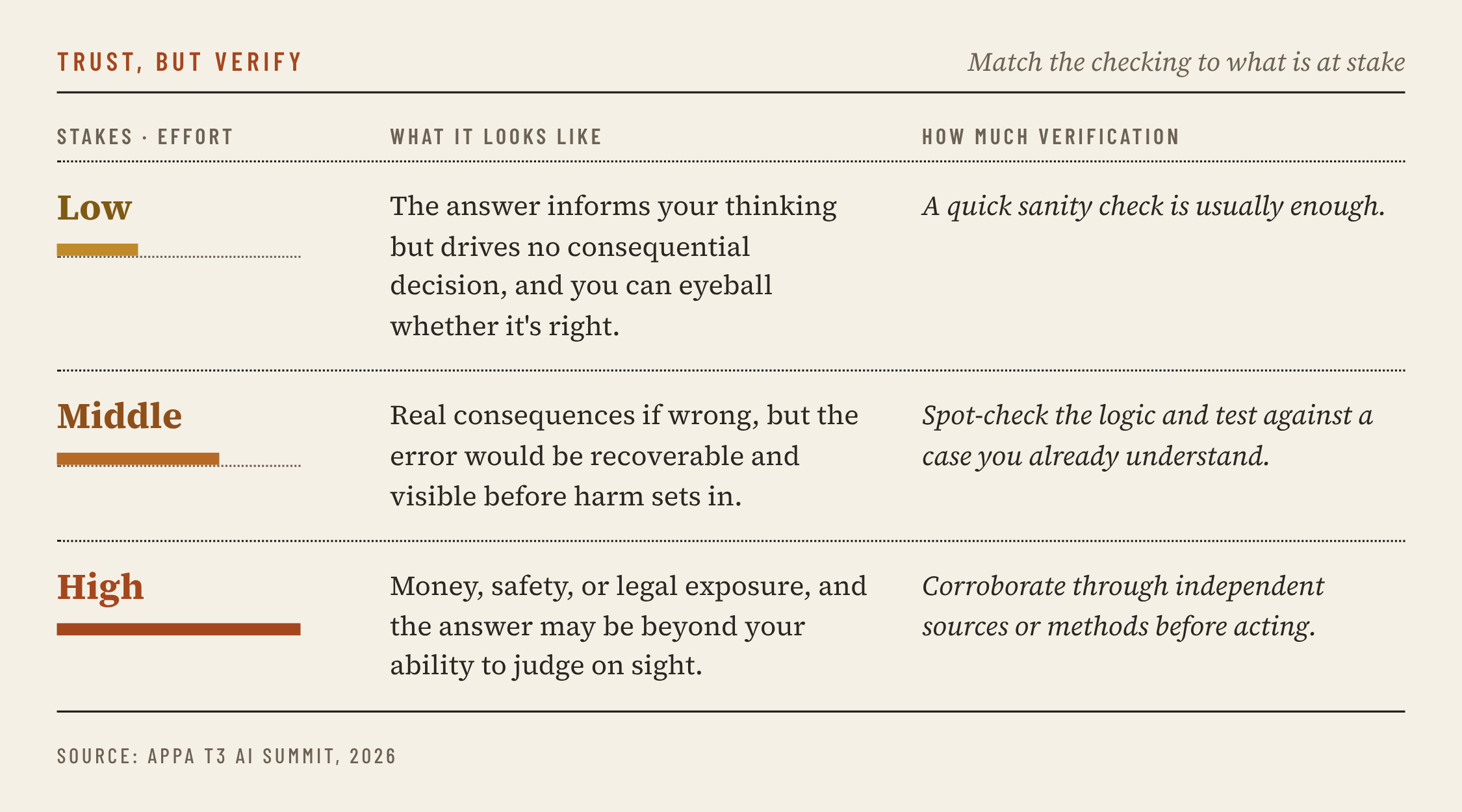
Figure 4. Match the amount of verification to the stakes of being wrong.
Every organization should establish a framework for deciding which AI-assisted actions may proceed with little intervention and which, while still benefiting from AI's processing power, require additional review, and how much.
Master the Craft, Not the Tools
Despite the prominence of a few notable AI tools in public conversation, hundreds of powerful tools already exist, with more arriving constantly: tools for presentation development, utility-system monitoring, audio transcription, and much more. Each is built to be user-friendly, interacting assertively with you and eagerly generating solutions.
Given this rapid proliferation, tools that don't exist today will emerge within twelve months, or sooner. Trying to master every tool is unrealistic, and constant relearning likely wouldn't be worth it even if you could. The key is not to master particular tools but to master the skills that let you use any tool proficiently.
Chief among these is the ability to direct the tool through language, context, and prompting. As a technology driven by language prediction, AI reacts to queries and delivers responses that can be remarkably accurate and even inventive, but it is fundamentally reliant on the direction it is given. Each tool also has specific strengths and weaknesses, and subtle changes in wording can produce markedly different responses, or ones that vary in importantly nuanced ways. Learning to frame a problem, supply the right context, and iterate on prompts is a portable skill that outlives any single product.
Someone who has developed that instinct can walk up to a tool they have never seen and be productive within minutes, because the skill lives in them, not in the software.
Change Management Is the Hard Part, Not the Technology
“Contrary to popular belief, digital transformation is more about people than technology.”
George Westerman, MIT Sloan School of Management
AI is changing how we think about leveraging technology of all kinds. But technology doesn't adopt itself; people do the leveraging, and that process is slower and more complicated than one might imagine. Leaders and organizations often spend an inordinate amount of energy on "What tool should we use? What do we buy the license for? How do we implement it, and what does training look like?" Westerman's point is that when people think of digital transformation, they fixate on the digital part when the emphasis belongs on the transformation. We must reshape how we think about AI adoption.
The folly of treating AI as just another tool
When AI is treated like any other piece of software, a familiar pattern emerges: it is implemented, a handful of people are excited, some use it when they must, and others ignore it. Adoption itself becomes the goal, measured in the percentage of staff trained. When uptake lags, the reflex is to blame reluctant employees or inadequate training. Treated this way, AI's real potential is missed.
A different framing changes the dynamic. Consider AI a new coworker, or at least a smart, capable intern who has been hired and is sitting in the building, ready to work. Your intern has a basic understanding of your field, integrates easily into the team, learns from and alongside you, and will make mistakes whose work needs verification, but who steadily improves. Framed this way, AI becomes someone you invest time in, and that investment pays off. Successful implementation is not measured by how many people were trained; it is measured by work getting done better, faster, and more efficiently. Treat AI like an intern or coworker, while remembering that it isn't one.
Change-management focus areas
Adopting any new technology raises challenges; adopting one that people may initially find confusing or even frightening demands real attention. Specific needs vary by community, but several areas always warrant focus:
- Building understanding and building buy-in
- Providing support and building capabilities
- Managing fear of the unknown, including fear of being replaced
- Addressing learning anxiety and an unclear value proposition
- Confronting "we've always done it this way"
- Accommodating shift work and 24/7 operations
Leadership Sets the Ceiling
The extent of AI readiness in an organization mirrors the belief and investment shown by its leadership. That conviction, or lack of it, will either accelerate AI-related innovation or stall it. Facilities leaders must communicate in two directions at once: upward to the leadership they report to, and outward to the personnel they lead.
At the organizational level
Senior leaders bear the responsibility of establishing a shared understanding of data, security, and privacy that reaches every department and level, and that understanding should be easily accessible. A major roadblock to adoption is the unanswered question, "What data am I allowed to use?" Too often this leaves individuals and departments in bureaucratic limbo: filling out forms and negotiating with data access controllers, in some cases gatekeepers, who lack operational context. Requests to use one's own data get declined under blanket precautions written for sensitive personnel records but applied to, say, condenser-water pump cycles. Where risk-based data categories exist, they must be shared top-down as part of AI training, with clear guidance for escalating and evaluating data that doesn't fit neatly into a category.
Senior leadership needs to establish and communicate, with clarity:
- How the institution sees AI contributing to its work, and where the risks lie
- Which data categories pose genuine security risk, and why
- Which operational decisions should be protected but remain analyzable through aggregation or anonymization
- How IT and business units become partners in risk management rather than adversaries
- That AI adoption serves the institutional mission and is therefore enabled and supported
At the department level
Department leaders carry a two-fold task. First, they must be able to articulate why AI matters. Heads who have not spent time with AI may offer little beyond surface-level enthusiasm ("This is an amazing tool; it will save time and optimize our operations"), which, however well-meant, can ring hollow and hinder adoption.
Second, they must address the legitimate anxieties that accompany change with honest, if imperfect, answers. Left unaddressed, these become barriers. Be prepared to speak to:
- Why is this necessary now?
- "But we've always done it this way."
- What changes day to day in each role? What stays and what goes away?
- "With efficiency gains, will my position be eliminated?"
- "How will this affect my evaluation, and what are the incentives?"
- What support will help employees who consider themselves less tech-savvy?
- How will learning accommodate staff on nights and weekends who don't work a 9-to-5?
Turning IT from access controllers to partners
Facilities leaders must also engage actively with IT and information-security colleagues to define data categories by risk. In practice, many step back from this role. A proposal to use AI in a new way is often met with "No, that's a data-security risk," and if IT does not explain the rationale, the leader accepts the pushback as final. The conversation ends and the proposal dies. But IT is making a policy decision from limited operational context; lacking clarity about facility and utility data, it resorts to caution and applies broad restrictions.
The missed opportunity lies in the leader's response. Rather than accepting a flat no, treat it as the opening of a negotiation:
- "What specifically is the risk?"
- "What would reduce that risk?"
- "Can we achieve security through anonymization or encryption?"
- "Let's document what we're permitting and what safeguards we're using."
A collaborative approach to permissions, policies, and protections moves the organization toward responsible innovation rather than blocking it.
Leaders do not necessarily need to understand AI themselves to lead its adoption, if someone on the team can guide the technical decisions. They must, however, anticipate the challenges their departments will face and create space for that expertise. The cost of passive leadership is real: talent leaving for places that support innovation, and the organization falling behind while peers continue to advance. The rate of AI innovation will track the rate of adoption, which in turn reflects leadership's commitment to it.
From Curious to Confident: Evidence from the Field
The summit's central recommendation, that professionals need hands-on, practical ways to build AI skills, led to the development of the AI for Facilities: 101 workshop series. The founding cohort launched in April 2026, and demand was strong enough that a second cohort followed in June 2026.
Built specifically for educational facilities professionals and requiring no prior AI experience, the program ran across four live virtual sessions totaling eight hours. Participants brought their own AI tool and worked through real facilities scenarios: drafting executive communications, reviewing service contracts, modeling energy data, and prioritizing deferred maintenance. Each participant completed a capstone project applying AI to an actual task from their job.
The four sessions were sequenced as a deliberate progression rather than a set of independent topics. The first session was designed to lower the intimidation factor and got participants using AI for everyday communication tasks, establishing a foundational mental model: working with AI is a conversation, not a search query, and the quality of the output depends on the context you provide. The second session moved from writing into operational analysis, using AI as a thinking partner on the kinds of facilities problems that carry real weight and, just as importantly, teaching participants where to trust the tool and where not to. The third session introduced more advanced techniques and helped each participant assemble a personal, repeatable workflow, then launched them into a capstone. The fourth session was given over to participants presenting what they built, learning from one another, and leaving with the confidence to continue on their own.
Post-workshop survey responses from the two cohorts (26 respondents in total) point to a consistent shift from curiosity to confidence. On a 10-point scale, every measured statement averaged between 8.85 and 9.62. The strongest result concerned the ability to identify a meaningful use case for AI on the job, precisely the intentional, question-first mindset this article argues for.
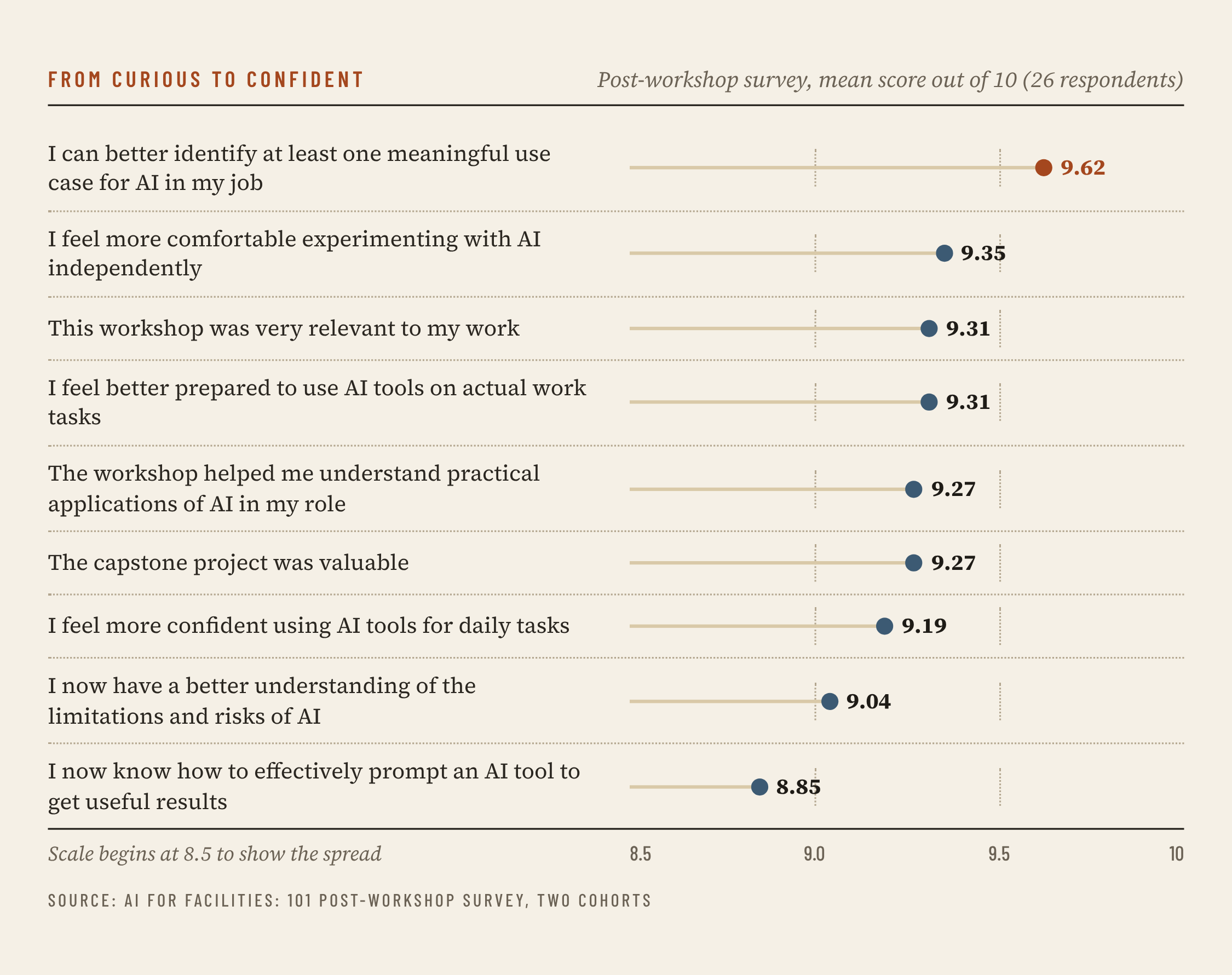
Figure 5. Post-workshop survey results from two AI for Facilities: 101 cohorts.
"One of the important parts of the capstone reflection was not the finished product but the account of where (and why) participants had to step in and correct the tool, which counted for as much as a polished success."
The engagement signals were equally clear. Of 26 respondents, 25 asked to be added to an ongoing AI community for continued engagement, and 25 said they would recommend the workshop to colleagues. Interest in becoming a facilitator for future deliveries doubled between Cohort 1 and Cohort 2, from 25% to 50% of respondents. Nine participants across the two cohorts expressed readiness to teach. That trend is a notable sign that they moved not just toward using AI but toward helping others learn it. Respondents spanned a broad cross-section of the profession: grounds and operations supervisors, energy managers, directors of facilities, and vice presidents, drawn from universities, colleges, K-12 independent schools, business-partner organizations, and peer associations across the United States, Canada, the United Kingdom (AUDE), and Australia (TEFMA).
The open-ended feedback reinforced the summit's themes. Participants most valued applying AI to maintenance-specific and role-specific scenarios they could use immediately and collaborating with peers from other institutions to see how far along others had come. The most common request for improvement was simply more: more time for the capstone, more open peer discussion, and more baseline orientation to different AI platforms before diving into exercises. That appetite for more practice is itself evidence of the summit's core call to action. An explicit request has also emerged from participants: an advanced 201-level program. APPA is taking that feedback under advisement.
The Time Is Now
Artificial intelligence is already changing how work is done and business processes are being altered, but this path is navigable. The takeaways from both the summit and the workshops indicate that when it comes to AI, professionals who run higher-ed facilities have moved quickly from curious to confident, if they have had a hands-on opportunity to play around. The technical barrier is data readiness and governance. The human barrier is change management. Both succeed or fail as a matter of leadership. Starting small, but starting now, with a defined task and a clear measure of value will prove to be the most productive step in building momentum toward the surest foundation for what comes next.
About the Authors
Sid Thatham works in energy and AI enablement at the University of Cincinnati, where he has served as an energy engineer and taught as an adjunct professor. A UC graduate, he holds a master's degree in chemical engineering and an MBA. In 2026, he was recognized as a young professional of the year by both the Association of Energy Engineers and the Combined Heat & Power Alliance. Connect with Sid on LinkedIn.
Pete Zuraw is vice president of market strategy and development at Gordian, the company behind the annual State of Facilities in Higher Education report. He works with colleges and universities on using reliable facilities data to guide capital planning and long-term investment decisions. Connect with Pete on LinkedIn.
Read the Full Issue
This article first appeared in the Fall 2026 issue of Facilities Manager, the magazine of APPA. Read the full Fall 2026 issue for more stories from member campuses.
The Magazine of APPA
Facilities Manager, Fall 2026
APPAU St. Louis, Start With Better Data, AI-Ready Workforce, and The Most Important Call.
Have a project or lesson to share with your peers? Email publications@appa.org to submit to Facilities Manager.