
One APPA, Not Thirty
Thirty-seven leaders spent two days in DC on the question most associations avoid. In 2027, we want every chapter in the room.
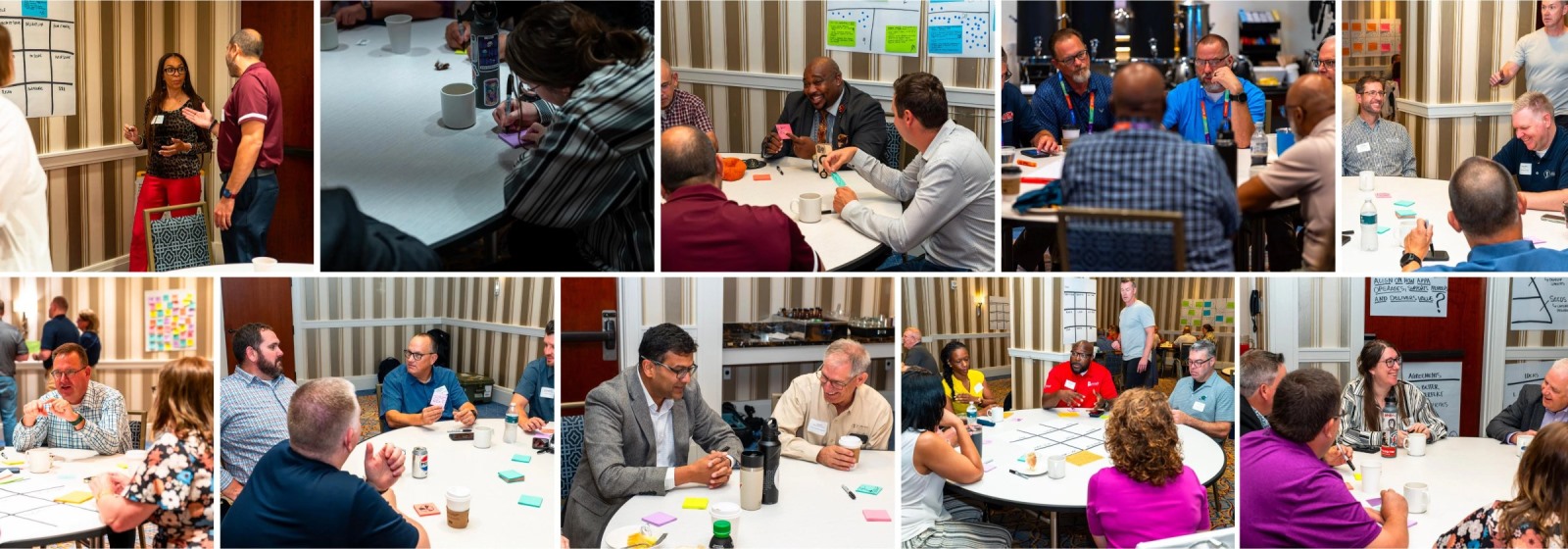
Two days before the APPA Annual Conference opened at the Gaylord National Resort, thirty-seven leaders were already at work in a room in Washington, DC.
Chaper presidents, regional officers, national board members, and staff came from research universities and community colleges, from k-12 districts and independent schools, and from both sides of the Canadian border. On July 14 and 15, they sat down together for the first APPA Leadership Exchange and put a question on the table that most associations spend years not asking out loud: are the three levels of this organization actually working toward the same thing?
The answer, from the people who volunteered it, was not really. Not yet. And then they spent two days doing something about it.
They started with the truth. Forty-seven leaders completed a pre-workshop survey before the meeting, rating alignment across five dimensions on a five-point scale.
How aligned are APPA's three levels? (Average rating, 1 to 5, n = 40)
| Communication and information flow | 3.35 |
| Ease of collaboration | 3.20 |
| Use of resources | 3.17 |
| Strategic direction | 3.10 |
| Consistency of member experience | 2.95 |
Nothing cleared 3.4. The lowest score went to consistency of member experience, which is another way of saying that what a member gets from APPA depends substantially on where they happen to work.
The open responses were blunter than the numbers. Messaging does not cascade reliably from one level to the next, and it can be difficult to know who to contact on a chapter board. Chapters maintain their own websites, email systems, and membership rosters, paying separate hosting and processing fees while contact data goes stale. Conferences are planned independently, producing scheduling conflicts, sponsor fatigue, and what one leader called a dog-eat-dog fight for the same members and business partners. One respondent summed it up in a line that got repeated in the room all week: it can feel like there are 30-plus APPAs instead of one connected network.
Nobody mistook this for a failure of commitment. People care deeply. The friction is alignment, communication, and clarity of ownership. Those are fixable, which is exactly why the conversation was worth having face to face.
They also named what is working, this was not two days of complaining. Professional development came through as the flagship. APPAU, the Supervisor's Toolkit, and the Leadership Academy were named again and again as the greatest benefit flowing across the organization, building capacity no volunteer board could build alone.
Several leaders described the last two years as a genuine turn: the rebrand, new technology and event services that lighten the volunteer load, and APPA staff who have made themselves visible and accessible. One described a relationship with national that had turned 180 degrees.
“The most beneficial thing was the opportunity to move around the room and interact with my peers from around the country.”
The catch is that this strength is uneven. Where relationships exist, collaboration is strong. Where they do not, chapters describe operating independently for years with almost no contact. Which is the quiet argument for being in the room: the chapters that were there got connected.
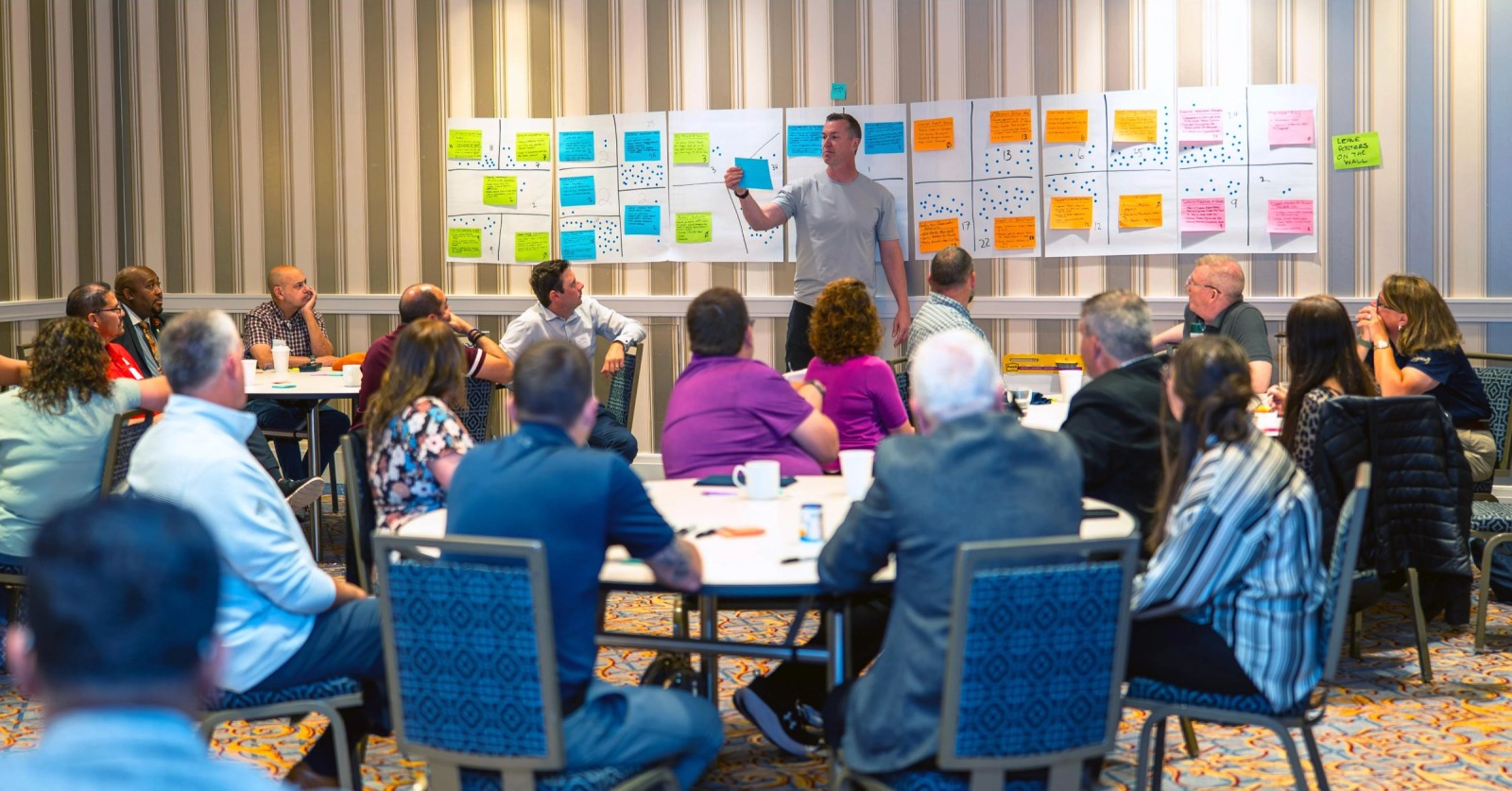
The design mattered as much as the agenda. Leaders were mixed across levels rather than seated by region, so a chapter president from one state worked a problem alongside a regional officer and a national board member. Ideas went up on the wall, got argued over, and were prioritized by the room rather than from the podium.
The discipline came in the second half. Every idea that survived the vote had to run the same unglamorous gauntlet. What problem does this actually solve? How would it work? What is explicitly out of scope? What could go wrong? How would we know it worked? What does it cost?
That last question is where good workshop ideas usually die. Not here. Groups drew their own boundaries, named their own risks, and put real numbers against their own proposals instead of leaving the arithmetic to someone else.
A slate of recommendations came out of those two days. It now goes to the APPA Board for review and sequencing, and will be shared once the Board has worked through it. Not all of it will move at the same speed, and several items carry investment figures that will require real decisions rather than enthusiasm. But it exists, it has owners attached, and it was built by the people who will have to live with it.
Ask the people who were there what mattered most and almost none of them lead with the recommendations.
Knowing we are not alone. Meeting the people whose names had only ever been in an email. Hearing that a chapter three states away is fighting the same fight. Networking with chapters and regions I have never met in the past. Collectively solving problems.
“The most beneficial thing was the opportunity to move around the room and interact with my peers from around the country.”
You cannot get that from a recap.
ALE returns in 2027. Every chapter should be there.
The APPA Leadership Exchange will be back, in person, on Monday, July 12, 2027, at the Grand America in Salt Lake City, Utah, ahead of the APPA Annual Conference.
The goal for 2027 is simple, and it is not a stretch target: every chapter represented in the room. Not most. Every one.
Thirty-seven leaders got this started. The decisions about how this organization connects, communicates, and serves its members will keep being made by the people who show up, and there is a seat with your chapter's name on it. More information is coming soon on the APPA website.
Represent your chapter. This conversation gets better the more of us are in it.
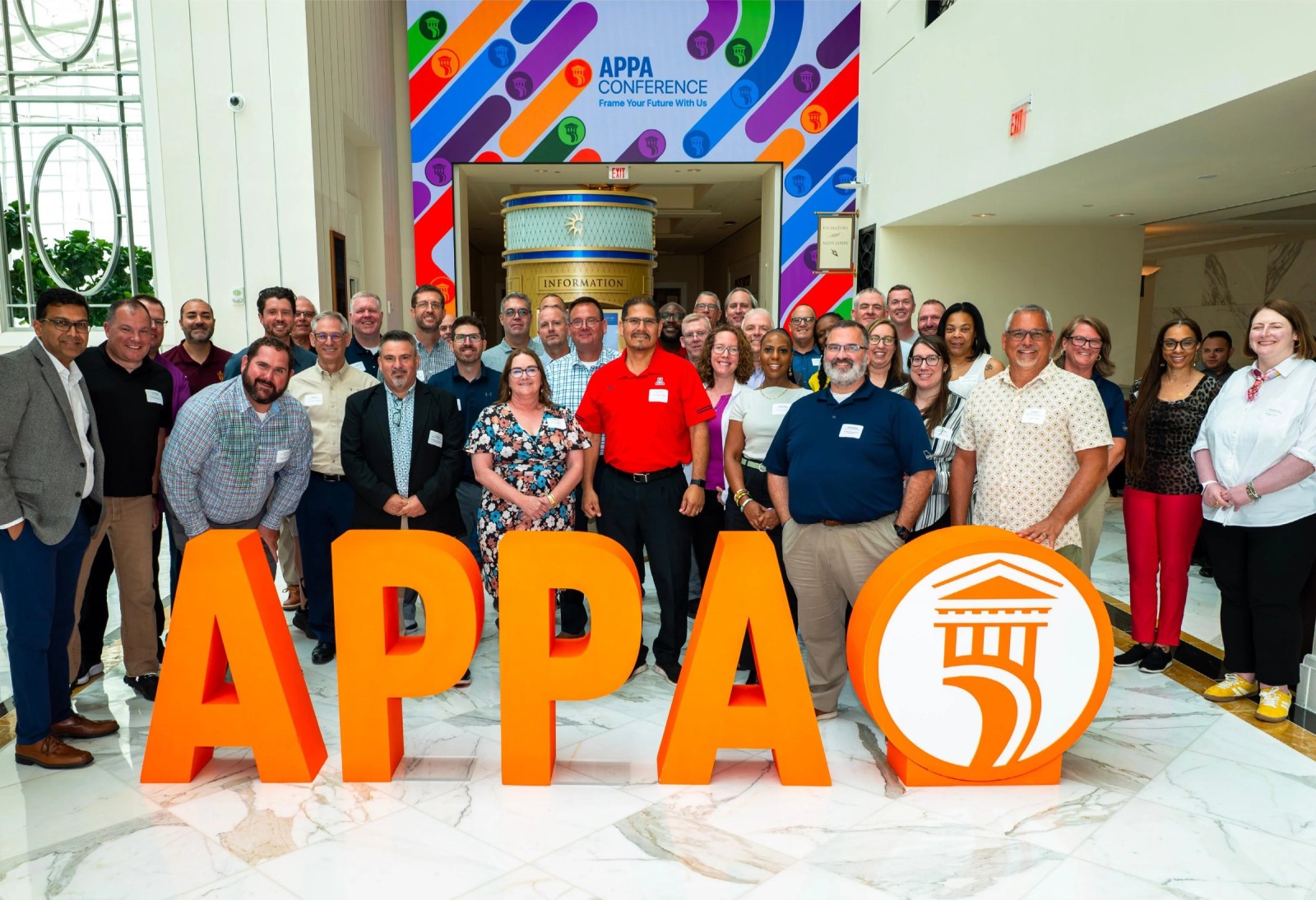
Who Was In The Room
- Lalit AgarwalAPPA
- Robert J. AldrichHackley School
- Quajalyn AmosUniversity of Maryland College Park
- John ArgentoPrinceton University
- Erika BalmAPPA
- Jeffrey BenjaminTulane University
- Greg ClaytonUniversity of Prince Edward Island
- Bryan CoadySt. Paul's School
- Douglas CosentinoDartmouth College
- JeCory CrenshawUniversity of Alabama at Birmingham
- Colby D. DyeKirkwood Community College
- Solomon T. FranklinUniversity of North Carolina at Charlotte
- Mary GrubeSt. Mary's College of Maryland
- David HallMissouri State University
- Gabriel HamptonUniversity of Nebraska–Lincoln
- Louis R. HengesbachMichigan State University
- John HerreraArizona State University
- Ally KeeneyIllinois State University
- Mia LoveStanford University
- LaDella Mackey-WilliamsAlcorn State University
- Glen MathieuSMG Corporate Services
- Christopher McConnellUniversity of Alaska Anchorage
- Mark OwensSouthern Illinois University Carbondale
- Jason PenneyDalhousie University
- Tricia PughUniversity of Northern Iowa
- Ross RickUniversity of North Carolina at Greensboro
- Matthew RomUniversity of Oklahoma
- Nicole SandersonUniversity of Washington Bothell
- Jerry P. SantosBridgewater State University
- Crystal D. SmithThe University of Chicago
- Scott StevensElon University
- Travis ThomasCalifornia State University, Northridge
- David UlmerAPPA
- David VanDeventerClemson University
- David VanHookBartow County School System
- Dan WhatleyAuburn University
- Kelly A. WilsonColumbus State University
APPA Town Hall: Ready to get more involved with APPA? Start here.
Hear the plan behind the new ALE charter, meet the leaders shaping it, and see where you could fit in.
Hosted by Lalit Agarwal, APPA President & CEO. Open to all APPA members.
Read it in Facilities Manager
This article first appeared in the 2026 APPA Conference issue of Facilities Manager magazine. Flip through the full issue for more from the conference.